
Last Updated: 15 November 2026
Quick Summary
The best treats for puppy training are small, soft, high-value rewards that fit within roughly a tenth of your puppy's daily food intake, sized to a pea. Air-dried, meat-based treats work well because their strong smell and tender texture suit repeated rewards during training.
- Keep training treats to roughly a tenth of your puppy's daily food intake.
- Size each reward to a pea so it can be swallowed in a second.
- The lamb treats' feeding recommendation is 5 to 10 treats per day.
- Use soft air-dried pieces for an eight-week-old puppy still learning to chew.
- Save high-value fish or meat rewards for recall and outdoor training.
Table of Contents
- Best Treats for Puppy Training: What Actually Works
- How Many Treats for Puppy Training and How Big Should They Be?
- Puppy Treat Size for Training: Matching Texture to Age
- Frequently Asked Questions
Best Treats for Puppy Training: What Actually Works
The best treats for puppy training are small, soft, high-value rewards that fit into your puppy's daily calorie allowance. Air-dried, meat-based training treats are a popular choice because they tend to carry a strong smell and a tender texture, which many owners find useful for repeated rewards.
A common mistake is buying one big bag of biscuits and breaking them by hand. Biscuits crumble and take too long to chew; training rewards need to be swallowed in a second so the puppy can get back to learning.
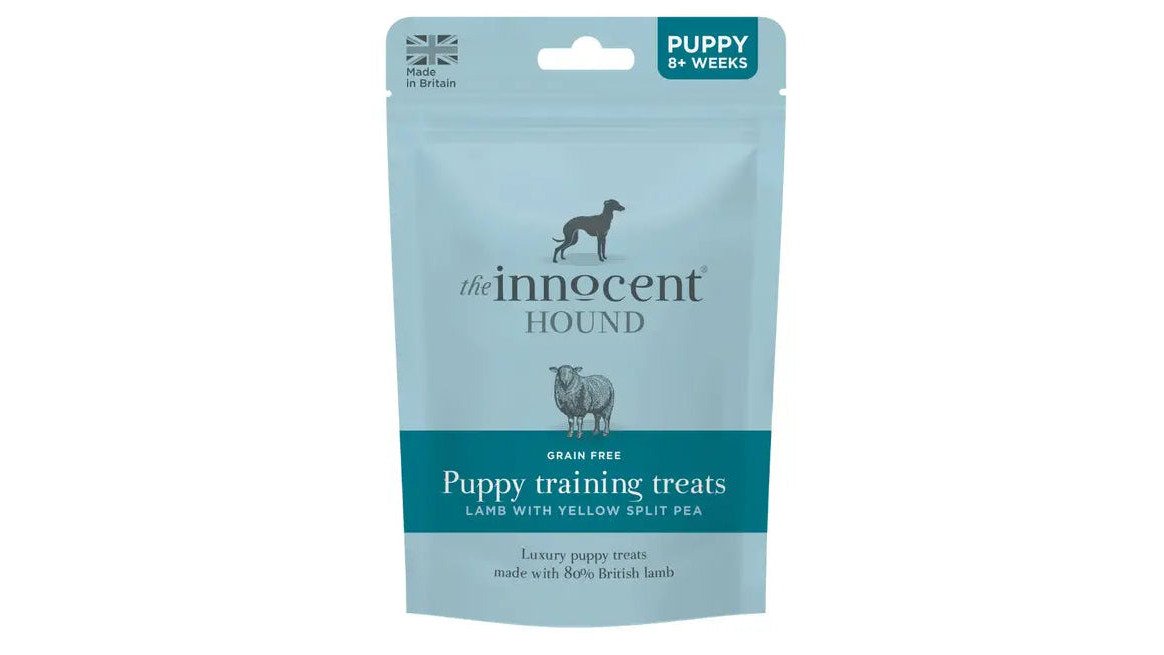
- Single-protein recipes are easier to rule out if your puppy has a sensitive tummy. Our Puppy Training Treats - Lamb with Yellow Split Pea are made with 80% fresh British lamb and are suitable from 8 weeks.
- Soft, air-dried texture suits young mouths and keeps the aroma strong, which holds a puppy's attention.
- Natural, minimal ingredients are worth checking on the label. See our guides to single ingredient dog treats for puppies and why natural dog treats may suit your dog better.
Watch out: when a puppy has loose stools, it helps to introduce one new treat at a time so the cause is easier to identify. Start with one protein and stick to it for a week.
How Many Treats for Puppy Training and How Big Should They Be?
Keep training treats to roughly a tenth of your puppy's daily food intake and size each reward to a pea. Check the feeding guide on your puppy's food and reduce the main meal slightly on heavy training days.
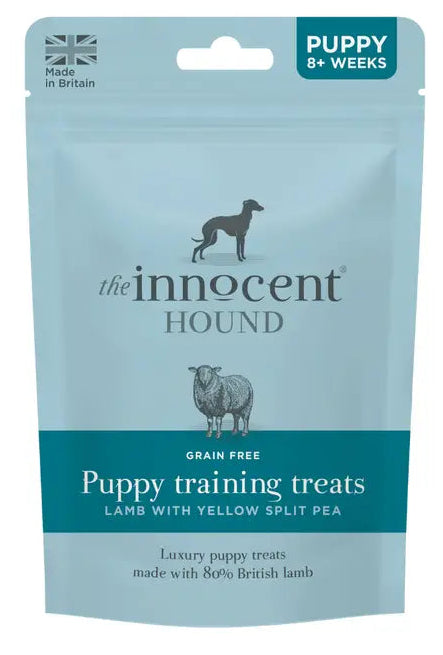
The lamb treats' feeding recommendation is 5 to 10 treats per day as part of a balanced diet. Ten pea-sized pieces is a lot of rewards; ten biscuit-sized pieces is not.
A pouch at your waist can be more convenient than a handful in your pocket. If you are weighing up kit, read our comparison of a treat pouch versus a treat ball for training.
| Puppy weight | Daily treat allowance | Pea-sized rewards |
|---|---|---|
| Under 5 kg | 5-8 treats | Roughly 10-16 half-pieces |
| 5-10 kg | 8-10 treats | Roughly 16-20 half-pieces |
| 10-20 kg | 10-12 treats | Roughly 20-24 half-pieces |
These are starting figures, not a prescription. A puppy carrying extra weight, or on a vet-prescribed diet, should have its allowance set by your vet.
Puppy Treat Size for Training: Matching Texture to Age
Texture should change with age. An eight-week-old puppy is still learning to chew, so soft air-dried pieces are safest. By twelve weeks, most puppies handle a firmer cube; by six months, a small firm piece is fine.
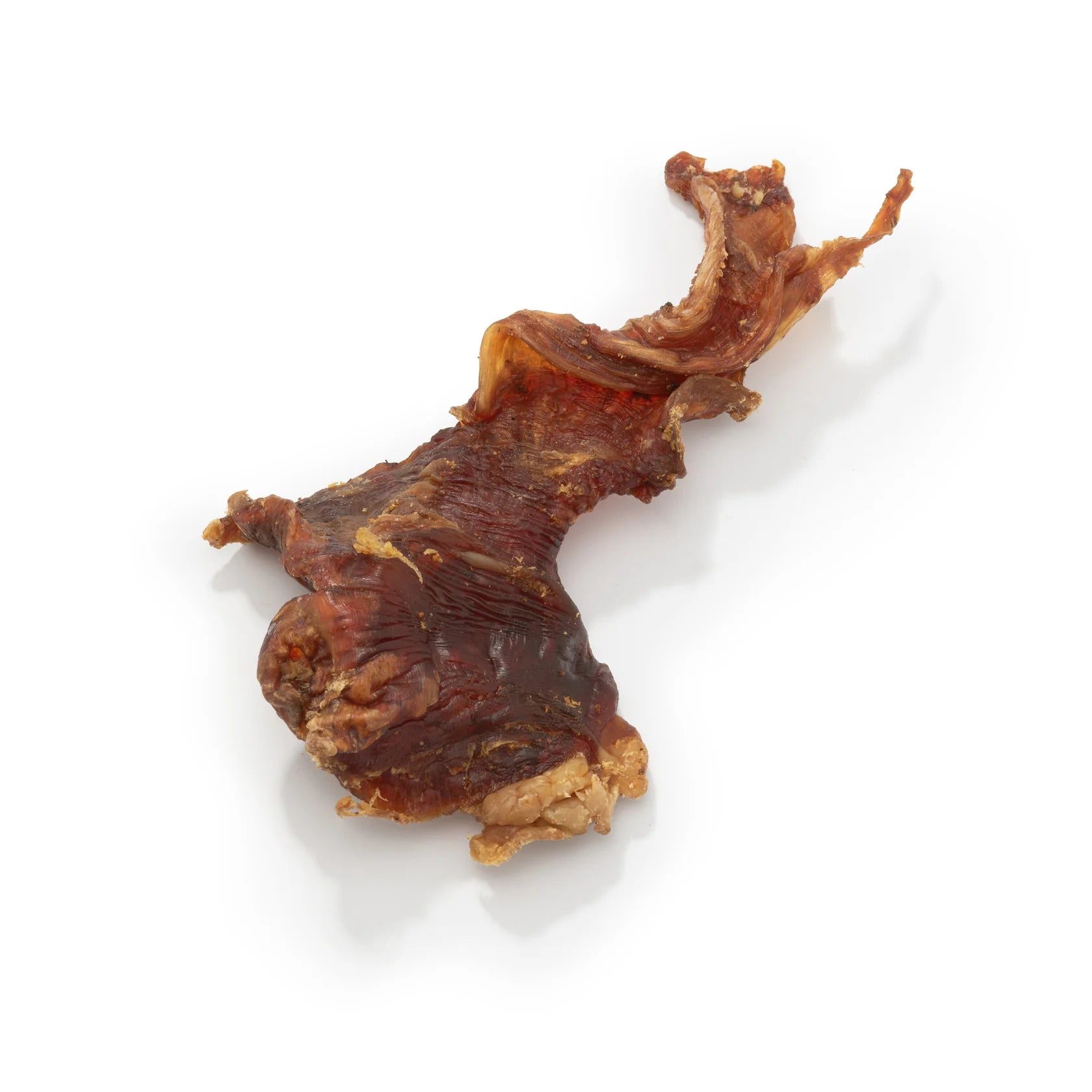
Our Roast Beef Pieces are gently air-dried, 100% beef and described as an easily digestible chew, a possible step up once your puppy is confidently chewing. For younger pups, keep to the soft lamb pieces or a small fish cube.
- Low value: a piece of their own kibble, for easy behaviours at home.
- Medium value: a soft air-dried training treat, for new commands.
- High value: a strong-smelling fish or meat reward, saved for recall and outdoor training.
Keep high-value rewards for special moments so they stay motivating.
Puppy training rewards only work if the treat is small enough to repeat and good enough to earn attention. R&J Pet Co. selects air-dried, British-made training treats with simple recipes, clear feeding guidance and recyclable packaging, so you can reward often without guesswork. Get started with R&J Pet Co. and build a reward system your puppy actually responds to.
Frequently Asked Questions
How small should puppy training treats be?
Aim for pieces roughly the size of a pea, about 5mm across. Tiny rewards let you repeat a behaviour many times in a short session without overfilling your puppy. Soft treats are easy to pinch into smaller pieces, and air-dried options such as the Puppy Training Treats - Lamb with Yellow Split Pea are already cut to a pocket-sized training size. If a treat crumbles when broken, it is probably too large for quick-fire training.
How many treats can a puppy have during training?
Treats should make up only a small share of your puppy's daily food, so count them against the overall ration rather than adding them on top. A practical approach is to set aside part of the daily allowance as rewards and reduce the main meal to match. The Innocent Hound recommends feeding 5 to 10 of its puppy treats per day as part of a balanced diet, which is the manufacturer's stated guidance.
Can I use my puppy's normal food as training treats?
Yes. Kibble works well as a low-value reward for easy behaviours your puppy already knows, and it keeps calorie intake predictable because you simply take it from the daily ration. Keep higher-value rewards, such as small pieces of meat-based treats, for new or difficult tasks like recall. Rotating between kibble and a richer treat helps your puppy stay interested without overfeeding.
