
Last Updated: 30 October 2026
Quick Summary
Natural dog treats are often better for ingredient quality and digestibility, but not automatically. Processing is not the enemy, and a natural label is not a protected term in the UK, so judge the label rather than the marketing. Match the treat to your dog, the job and the ingredient list.
- A natural dog treat uses minimal processing and no artificial colours, flavours or preservatives.
- Natural treats usually cost more and have a shorter shelf life than processed treats.
- Look for a named protein first and an ingredient list under five items.
- Always supervise your dog with a chew and take it away once it is small enough to swallow.
- Treats should make up only a small proportion of a dog's daily calories.
Table of Contents
- What Makes a Treat Natural, and Why It Matters
- Natural Versus Processed Treats: A Side-by-Side Comparison
- Safe Dog Treat Ingredients to Look For and Avoid
- Healthy Treats for Dogs: Benefits, Digestion and Dental Health
- Rawhide vs Natural Dog Treats: Which Is Safer?
- How Many Treats Should a Dog Have a Day?
- Frequently Asked Questions
What Makes a Treat Natural, and Why It Matters
Walk into any pet shop and you will find bags shouting "natural" from every shelf. The label is doing a lot of work. So before we ask whether natural dog treats are better, it helps to know what the word actually means.
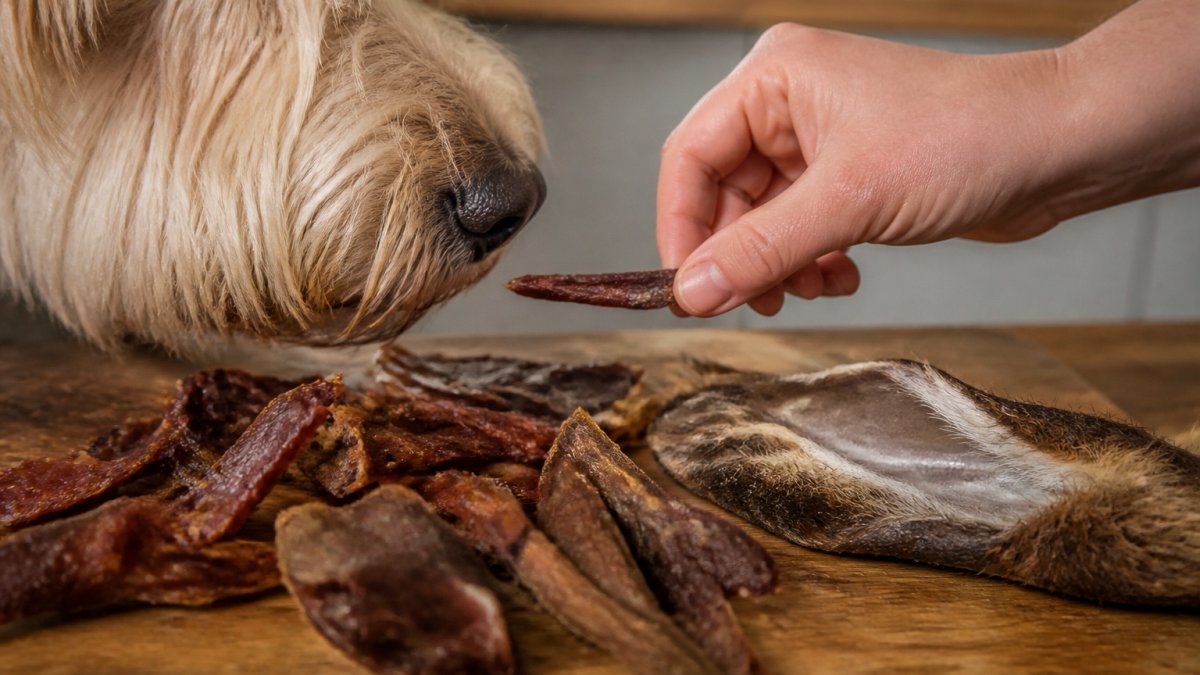
A natural dog treat is one made from ingredients that come from an animal, plant or mineral source with minimal processing, and without artificial colours, flavours or preservatives. That is the working definition most responsible sellers use. It is not a legal guarantee of safety or quality.
The Legal Definition and What Labels Really Mean
In the UK, "natural" is not a protected term on pet food labels in the way "organic" is. That means a manufacturer can use it fairly loosely. The UK Pet Food guidance on labelling sets out what responsible makers should declare, but the term itself carries no legal weight.
What should you look for instead? A short ingredient list you can read out loud. "100% Venison Meat" tells you everything. "Meat and animal derivatives, cereals, minerals" tells you almost nothing.
Natural Versus Processed Treats: A Side-by-Side Comparison
The honest answer is that natural treats are often better, but not automatically. Processing is not the enemy. It is what makes some treats cheap, shelf-stable and consistent. The useful question is what you are trading away, and for which dog.
| Feature | Natural Treats | Processed Treats |
|---|---|---|
| Ingredient list | Short, recognisable, often single-ingredient | Longer, sometimes vague ("meat and animal derivatives") |
| Additives | Usually none | Colours, preservatives, humectants common |
| Processing | Air-dried, baked, or minimally treated | Extruded, rendered, or heavily cooked |
| Shelf life | Shorter; often weeks to a few months once opened | Longer; often 12-18 months unopened |
| Cost per treat | Higher | Lower |
| Digestibility | Generally easier for sensitive stomachs | Varies widely by recipe |
| Consistency | Batch-to-batch variation is normal | Highly uniform |
| Convenience | Crumbs, odour, storage needs | Clean, portable, resealable |
| Training use | Break into small pieces; strong scent value | Easy to pocket and dispense |
What You Are Actually Trading
Natural treats are often valued for ingredient transparency. A single-ingredient dried meat treat tells you what is in it. Processed treats win on price, shelf life and consistency, which matters if you are buying in bulk or training a puppy through several sessions a day.
Neither column is a guarantee. A "natural" label is not a protected term on pet food labels, so a processed-style product can still carry the word. Equally, a short ingredient list does not automatically mean better nutrition, a treat heavy in fat is still heavy in fat. Judge the label, not the marketing.
A Decision Framework
Ask four questions in order:
- What is the first ingredient? A named protein (venison, chicken, white fish) is a good sign. A cereal or "derivatives" is not.
- How many ingredients? Under five is usually a treat; fifteen is usually a formula.
- What is the fat content? Compare per 100g across products. This is the number most owners ignore and the one that affects weight most.
- How will you use it? High-value rewards for training, or a long-lasting chew for quiet time? The answer changes which treat is right.
If you want to see the difference for yourself, browse our range of natural dog treats and read a few labels side by side.
Safe Dog Treat Ingredients to Look For and Avoid
The safest ingredient list is a short one. Look for a named protein first: venison, chicken, fish, beef. Look for a named source where possible. Avoid anything vague, and avoid added sugar and salt.
Safe to look for:
- Single named proteins, such as venison or white fish
- Air-dried or baked rather than heavily extruded
- No artificial colours or preservatives
Worth avoiding:
- "Meat and animal derivatives" with no named species
- Added sugar, salt or syrups
- Long lists of unrecognisable additives
Reading the Ingredient List Like a Label Detective
Ingredients are listed by weight, so the first two or three entries tell you most of the story. If a protein sits at the top and nothing artificial appears anywhere, that is a good sign. If the list runs to fifteen items and the first is a cereal, put it back.
One ingredient worth understanding in detail is a natural chew like antlers: our guide to antlers for dogs covers the benefits and the watch-outs before you buy.
Healthy Treats for Dogs: Benefits, Digestion and Dental Health
Treats do two main jobs: they reward good behaviour and provide a tasty extra. A single-ingredient dried meat treat gives your dog animal protein with nothing extra.
Chewing can also provide mental stimulation.
Fish treats are one option to consider. Our guide to fish treats for dogs explains the basics.
Rawhide vs Natural Dog Treats: Which Is Safer?
Natural treats are often chosen as an alternative to rawhide, but no treat is risk-free. Rawhide is processed hide that can swell and cause blockages in some cases. If you are looking for an alternative, you can browse natural buffalo chews.
Natural chews carry their own risks, and the strongest guidance is practical rather than promotional.
The Real Risks of Natural Chews
- Choking and blockages. Any chew can splinter or be swallowed in a lump. Dried bones, antlers and hard hooves are the usual culprits.
- Tooth fractures. Very hard chews, antlers, some bones, nylon-style alternatives, can crack teeth, particularly in older dogs or dogs with existing dental problems.
- Contamination. Dried and raw animal products can carry bacteria (Raw pet foods: handling and preventing infection). Handle them as you would raw meat: wash hands, bowls and surfaces afterwards, and do not let a chew sit on a soft furnishing for days.
- Digestive upset. Rich or fatty chews can cause loose stools, especially if introduced quickly.
Matching the Chew to the Dog
Size is the first filter. A chew should be clearly larger than your dog's mouth so it cannot be swallowed whole, and it should be hard enough to satisfy but not so hard that it risks teeth. Small dogs should never be left alone with a large chew. Puppies, seniors and dogs with dental disease are usually better with softer, digestible options.
When to Avoid a Chew Entirely
Skip hard chews if your dog has a history of tooth fractures, a sensitive stomach, or a tendency to gulp food. If your dog has pancreatitis or another dietary restriction, ask your vet before introducing any new treat. A chew that suits one dog can be wrong for another.
How Many Treats Should a Dog Have a Day?
A common rule of thumb is that treats should make up only a small proportion of a dog's daily calories, so that they do not unbalance the diet. Ask your vet for guidance on what suits your dog.
Portion control matters more than most owners realise. Treats add up fast, and fat content varies hugely between products. Use small pieces for training so you can reward often without overfeeding. If your dog has a health condition, ask your vet before changing their diet.
Frequently Asked Questions
Are natural dog treats healthier than processed treats?
Natural dog treats are usually a better choice because they contain fewer additives, no artificial colours and no preservatives. Single-ingredient options like dried meat or fish give your dog protein without fillers. That said, natural does not automatically mean healthy: fat content, calories and portion size still matter. A natural treat fed in moderation alongside a complete diet is a sensible approach.
What should I look for in safe dog treat ingredients?
Start with a short ingredient list you can read aloud. Look for named proteins such as venison, cod or sprats, and avoid added sugar, salt and artificial preservatives. Check the fat and protein percentages on the pack, and match them to your dog's age and activity level. If your dog has allergies, single-ingredient treats make it easier to identify what triggered a reaction.
Are natural chews safer than rawhide?
Natural chews such as dried fish skin or animal ears break down more easily in the digestive system than rawhide, which is processed hide that dogs struggle to digest. Rawhide can also swell and cause blockages if swallowed in large pieces. Natural chews still need supervision, and you should remove any small leftover pieces before they become a choking risk.
How many treats should a dog have a day?
Treats should make up no more than about 10 per cent of your dog's daily calorie intake. For a small dog on around 400 calories a day, that is roughly 40 calories of treats, which might be a few small pieces of dried venison. Large dogs can have more, but the 10 per cent rule still applies. Always reduce the main meal slightly on days with heavier treat use.
Natural treats are usually the better choice, but the label alone will not tell you. Read the ingredient list, keep portions sensible, and supervise every chew. At R&J Pet Co., we stock single-ingredient treats and chews with clear labelling, British sourcing where possible, and a share of proceeds going to animal charities. Get started with R&J Pet Co. and treat your dog to something you can actually read the label of.
